
Introduced in 2010 as turbocharged 3.5-liter V6 in brand staples like the Tauris SHO and Lincoln MKS, the EcoBoost engine today is Ford’s bread and butter powerplant, replacing larger V8s while boosting power, performance and fuel efficiency. The engine powers everything from the Mustang and Focus, to the Bronco and Explorer and light and heavy-duty variants of the F-150. Available in 4 and 6-cylinder configurations and different displacements, EcoBoost engines combine direct injection, variable valve timing and turbocharging and still deliver respectable power numbers in engines that are also considerably lighter.
Part of the appeal is that they are readily tuned and upgraded with dozens of performance EcoBoost parts. After initial reliability issues in early iterations, all EcoBoost powerplants can be modded well past their factory power and torque numbers, provide better longevity with minor upgrades and sip less fuel in the process. Common changes include aftermarket air intakes, intercoolers, and performance exhaust systems, improving cooling, intake and combustion efficiency and turbo spooling, to provide vehicles that are more willing on the throttle, more fun to drive, and fare better with lower maintenance needs.
Why Install a Cold Air Intake?
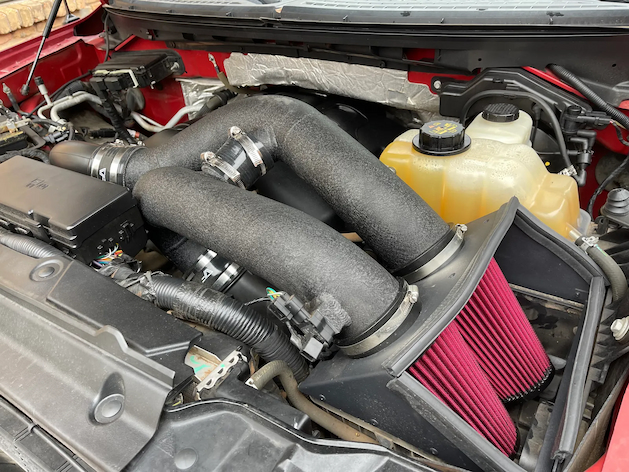
Factory EcoBoost engines go with sealed airboxes, paper filters, and plastic inlet plumbing. Common issues with this setup is heat soak from adjacent turbines and manifolds, reducing engine efficiency and turbocharging performance. Aftermarket cold air intakes solve temperature and turbo boost issues with revised designs and superior materials. This includes open layout high-flow cotton cone filters pushed further forward and fed cooler air with lower positioned air scoops, paired with treated aluminium piping in wider diameters and integrated metal heat sinks to keep intake and charge air cool.
Real-world benefits are increased air intake volumes, lower intake temperatures and improved engine efficiency. This provides EcoBoost-equipped vehicles with snappier throttle response, faster turbo spooling for more immediate torque and a louder intake engine sound. Engines also filter out more pollutants and are cheaper and easier to maintain with reusable oiled or dry synthetic filters. Rated power increases range between 5 and 25hp for standalone intakes, depending on the engine.
Pair Cold Air Intakes with Performance Exhausts
Aftermarket exhaust piping is the other side of the improved airflow coin. Production cars suffer from subpar mild-steel crush-bent pipes that reduce exhaust flow and cause unwanted restrictions and backpressure. These negatively affect how EcoBoost engines produce power, by significantly increasing temperatures on the intake side, and slowing combustion cycles.
Performance piping uses larger and straighter mandrel-bent layouts, constructed of high-strength stainless steel. This eases exhaust gases out faster, creates a deeper, rumbling sound (akin to that of Ford’s aspirated V8s) and bumps power and torque numbers. Full systems with revised piping from headers to tips adds up to 5 per cent more power, roughly 15hp in the smaller-displacement Mustang or 20hp in the 3.5-liter EcoBoost in the F-150. All vehicles also get a welcome boost in low-end torque for more immediate get-up-and-go and improved towing power in trucks.
Contain Excess Heat with Aftermarket Intercoolers
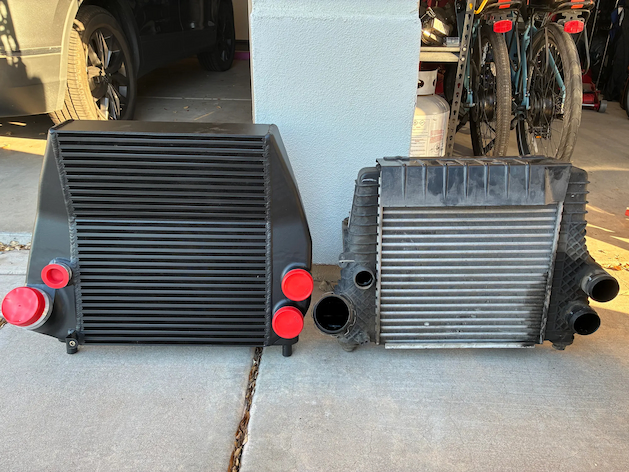
Early Ecoboost engines suffered from overheating and condensation buildup due to undersized intercoolers. These caused accelerated heat soak, misfires under heavier engine loads, and power loss during acceleration. Although Ford ironed out mots of these problems in subsequent engines, aftermarket intercoolers remain some of the best-selling performance EcoBoost upgrades.
These go with larger-core bar-and-plate layouts, specialized inlet and outlet tube designs and TIG-welded billet or cast aluminum end tanks – instead of the smaller tube-and-fin and plastic end tanks in factory setups. The changes result in lower intake temperatures for improved turbo spooling, more oxygen-rich air for increased combustion efficiency, and importantly, much lower heat soak from hot engine components. Combined these provide faster acceleration, ensure easier towing and retain power in hot and humid ambient conditions.
Better builds and superior material quality also translate to enhanced engine reliability. Sturdier metal construction, optimized flow paths and larger cores mean fewer engine and performance issues.
Accompanying Upgrades and Modifications
Cold air intakes, performance exhausts and large-core intercoolers are the base changes before considering serious engine and vehicle mods in subsequent stage tuning. Even before adding larger, drop-in and faster spooling turbos, new cams, high-flow fuel injectors and matching performance fuel pumps, these basic additions conservatively add 30 to 50hp – enough power to completely transform your driving experience.
For end stage 3 tuning, EcoBoost engines will also require new piston and conrod combos to handle the extra heat and higher revs, a strengthened crank to counter increased rotational vibrations, new head gaskets to seal against increased pressures and work on the engine block. These mods will see both 4 and 6-cylinder EcoBoost engines happily add 100+hp over stock. And still exceed Ford’s reliability even when pushed harder.