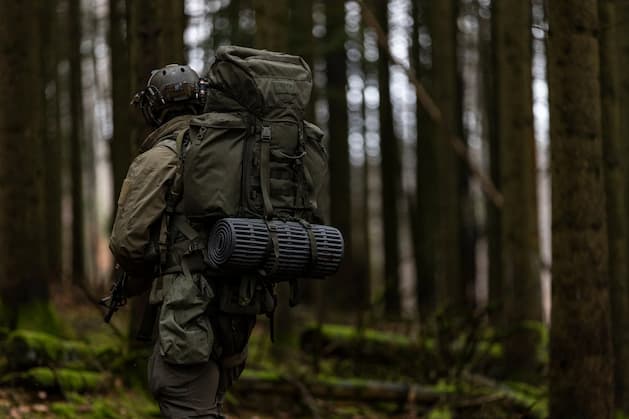

Unpredictable terrain, harsh weather conditions, there are various factors that can affect you when you’re out hunting. As such, it’s certainly an activity that can take you out of your comfort zone, pushing you past your limits. This is why having the suitable gear along with you is so important. Out for a day trip or after tracking game that can take up several days?
Whether or not you’re backpack hunting, having a sturdy and dependable backpack for hunting can make your adventures a whole lot easier, safer, comfortable and more enjoyable overall. It’s as crucial as the weapons, optics, blades, stalking tools, first aid kit, safety and navigation essentials because it provides the needed space to pack and organize your equipment.
Same as it’s designed to protect your belongings from the weather elements, keeping them intact from moisture and UV rays for utmost reliability in emergencies, it’s designed to protect your body. It does this with proper weight distribution to reduce the risks of muscle strains as well as help preserve your energy and focus for the long hikes.
What’s the Best Backpack for Hunting?
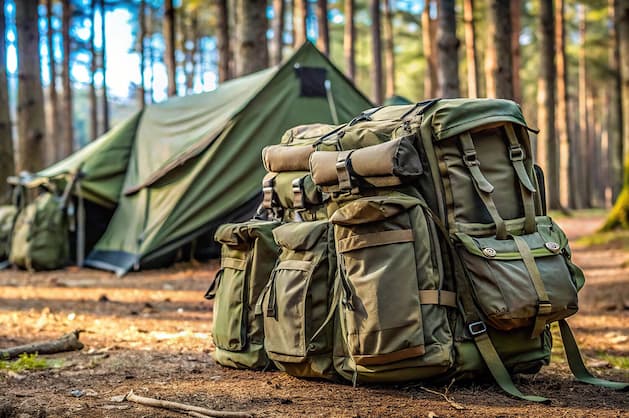
There are different factors that define the ideal backpack for your hunting style and your needs so here are a few tips to keep in mind the next time you’re shopping for a new pack.
The Length of Your Stay Outdoors
Knowing what you’re after ahead of the trip itself can make it more straightforward with the outdoor backpack shopping process, especially when it comes to selecting the ideal capacity. If you don’t plan on staying more than a day, a 20L to 35L pack is enough to cover your needs for carrying the essentials in terms of clothing, water, optics and some snacks.
If it’s a longer stay that takes several days, then you require a bigger and sturdier pack of at least 40L, if not more, to provide you with more space to pack up a shelter like a tent, a sleeping bag, and more food and water. For multi-day trips where you plan on carrying heavier gear, more supplies, and big game, 70L or more is the option to go for.
Your Comfort
Just because you may require a bigger pack with more capacity to handle bigger loads doesn’t mean it guarantees it would be comfortable for you to carry; the bigger the capacity and load, the bigger the weight you’d have to carry.
This is why it’s necessary to also pay attention to different aspects that have to do with comfort, such as whether or not the hunting backpacks Canada retailers of your choice provide come with adjustment features like cushioned shoulder harness, sternum straps, padded hip belts to offer the needed support and weight distribution.
Once you find those with these neat features, be sure to know your torso length so you have an idea about the shoulder harness and waist belt’s proper alignment if you’re buying online and don’t have the chance to try on the backpack before buying it.
To get this size, you need to measure by locating two points: the C7 vertebra (the small bony bump where the shoulders and neck meet), and the iliac crest (the prominent bony ridge on the waist). Stand straight, place the measuring tape directly on the C7 vertebra and let the tape fall down the back towards the hips, while you have one hand over the hip with the thumb pointing backwards.
Once you have these two points meet, have someone check the size for you. This size can help you choose a backpack in the ideal body proportions for you, with the exact torso length in consideration.
The Material
Rain, wind, snow, shine, whatever it is, your backpack has to be durable to withstand the weather conditions and keep your belongings safe and secure. For this, you should focus on materials that are known for the hardwearing properties, such as the case with man-made materials in the likes of HT Cordura, high-denier polyester and ripstop nylon known for the tensile strength and abrasion resistance.
The Features and Properties
These two factors aren’t to be overlooked either, as both can further make your selection better for your adventures and hunting success. From insulated compartments and materials that handle freezing temperatures, to materials that are non-rustling to avoid alerting the game of your whereabouts, every detail matters. While we’re at features, you may als consider useful the following essentials:
- a telescoping yoke for custom torso fit,
- zippered, quick-access pockets where you keep your essentials within easy reach,
- compatibility with quick attach for your rifles or bows to simplify the carrying, and
- compatibility with hydration reservoirs to help you stay hydrated even on those long hikes.
Define what’s important to you, what you simply can’t do without, and what isn’t that big of a feature or property to narrow down the options.