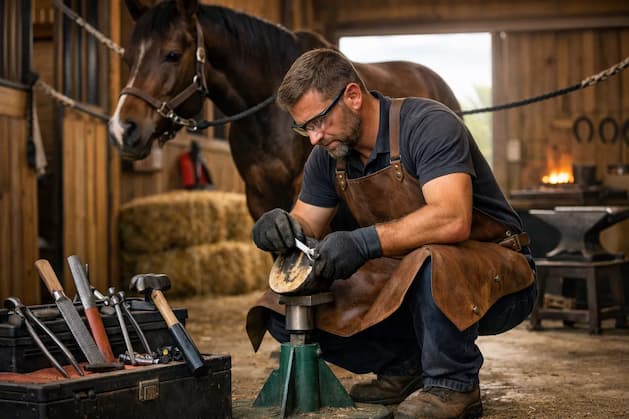

Spend a day under horses, and you’ll quickly discover that farrier work can be tough on your body. You’re bending, lifting, crouching, holding hooves, and handling sharp tools for hours at a time. It takes skill, patience, and plenty of physical effort to do the job well.
Because you’re focused on building your tool collection, safety gear can sometimes slip down the priority list. That’s understandable, especially when you’re starting out. The problem is that hoof care comes with its fair share of hazards. A horse can shift unexpectedly, a tool can slip, or flying debris can catch you off guard when you’re concentrating on the task in front of you.
That’s why experienced farriers rarely treat safety equipment as an optional extra. The right gear helps you work more comfortably, reduces the risk of injury, and makes the physical demands of the job easier to manage over the long term.
Why Safety Equipment Matters in Farrier Work
When you’re working around horses, you can do everything right and still find yourself dealing with the unexpected. Even a quiet, well-behaved horse can react to a sudden noise, movement, or unfamiliar sensation. A quick shift in weight or a startled step can create problems in an instant, particularly when you’re holding a hoof or working in a confined position.
At the same time, you’re handling tools designed to trim, cut, shape, and remove hoof material. Hoof knives, rasps, nippers, and hammers are all essential parts of the trade, but they demand concentration and respect.
Then there’s the physical side of the job. Repeating the same movements throughout the day places strain on your back, legs, knees, shoulders, and hands. While you can’t remove every risk from farrier work, you can give yourself a much better chance of staying comfortable and avoiding preventable injuries.
Good safety equipment allows you to focus on the horse in front of you rather than worrying about your clothing, your footing, or the possibility of minor knocks and scrapes.
Farrier Aprons as Essential Protection for Everyday Hoof Work
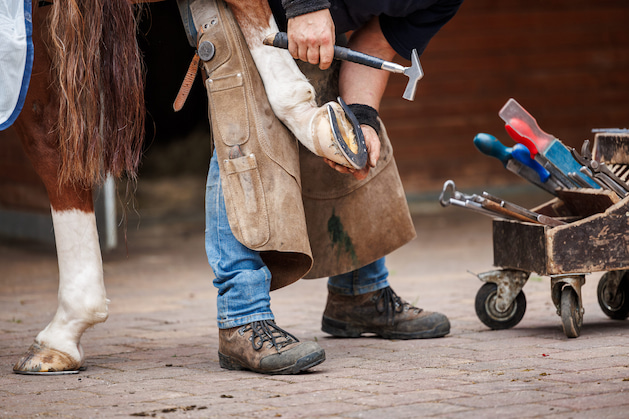
Ask experienced farriers which pieces of gear they use every day, and you’ll often hear the same answer: a quality pair of farrier chaps. They protect one of the areas that takes the most punishment during hoof work—your upper legs and lap. Every time you rest a hoof against your leg while trimming or shoeing, you’re creating friction and pressure. Over time, that constant contact wears through clothing and leaves your legs exposed to scrapes, bumps, and accidental tool contact.
Farrier chaps act as a protective barrier between you and the job. That extra layer helps shield your legs from:
- Hoof knife slips
- Abrasions from hooves
- General wear and tear
- Dirt and debris
- Premature damage to work trousers
Comfort is another reason so many professionals rely on them. When you’re working through a full schedule of horses, small discomforts add up quickly. Protective legwear helps absorb some of that pressure, making long days feel far more manageable.
You’ll also find that good-quality gear tends to improve efficiency. Many designs include practical storage options that keep essential tools within easy reach, reducing unnecessary movement while you work.
Protective Footwear Should Be One of Your First Investments
If you’re putting together your first farrier setup, start with your boots. Your feet spend all day supporting you, and they’re often the closest part of your body to a horse’s weight. A misplaced step from a horse can cause serious damage, particularly if your footwear isn’t up to the task. Strong work boots provide far more than basic protection. They also help improve balance, stability, and comfort throughout the day.
When choosing footwear, look for features such as:
- Reinforced toe protection
- Slip-resistant soles
- Durable construction
- Reliable ankle support
- Comfort for extended wear
Quality boots may cost more upfront, but they usually repay that investment through better durability and improved comfort. The last thing you want is sore feet halfway through a busy day or footwear that starts falling apart after a few months of regular use.
Hand Protection and Glove Considerations
Your hands are constantly at work, so it makes sense to protect them. Between handling hooves, gripping tools, and working with rough surfaces, your hands take a beating over time. Blisters, cuts, scrapes, and cracked skin are common complaints among farriers who spend long hours working outdoors.
The right gloves can help reduce that wear while still allowing you to maintain control of your tools. Many farriers prefer gloves that offer a balance between protection and flexibility. Bulky gloves may provide extra coverage, but they can make delicate work more difficult. You need enough dexterity to feel what you’re doing while still protecting your skin from everyday damage. Some jobs call for more protection than others, so it’s worth keeping a few different options available if your workload varies.
Eye and Hearing Protection That Shouldn’t Get Overlooked
Eye and hearing protection don’t always get the same attention as boots or protective clothing, but they deserve a permanent place in your safety routine. Small pieces of hoof, dust, dirt, and metal can become airborne without warning. It only takes one fragment in the wrong place to turn an ordinary day into a trip to the doctor.
A comfortable pair of safety glasses offers straightforward protection without getting in the way of your work. Modern designs are lightweight enough to wear throughout the day and easy to forget once you’ve put them on.
Hearing protection becomes particularly important when you use grinders or spend time in a workshop environment. Repeated exposure to loud equipment can affect your hearing gradually, which makes it easy to underestimate the impact. A simple pair of earplugs or earmuffs can help protect your hearing over the long run without affecting your ability to work effectively.
Additional Safety Equipment You Should Consider
Once you’ve covered the basics, a few additional pieces of equipment can make your workday safer and more comfortable. Many professionals use farrier aprons to provide extra protection and keep essential tools close at hand. They can also help reduce wear on your clothing and keep you cleaner throughout the day.
You may also benefit from:
- A stocked first-aid kit in your vehicle
- Knee support for extended periods of bending and crouching
- Back support products for physically demanding workloads
- High-quality work clothing designed for outdoor conditions
It’s also worth taking a few minutes every so often to inspect your gear. Worn straps, damaged fasteners, and excessive wear can reduce the level of protection your equipment provides.
Looking after your safety gear is no different from looking after your tools. Regular maintenance helps ensure everything performs properly when you need it.