
Deciding to take up DJing is so much more than pressing play – it’s passion for music and creative expression through songs, searching for that adrenaline rush and euphoria that come from connecting with a crowd and driving the energy throughout a certain space.
Love for music and practice to gain skills, like beatmatching and EQing, are mandatory, but so is having the right equipment and tools to back you up. A solid music library in the suitable formats, laptop or PC, DJ software and controller plus headphones are all essentials, or the alternative CDJ and mixer, but don’t overlook speakers either.
While not exactly a necessity, as you can rely on the headphones set to cue and preview tracks, DJ speakers can in handy with monitoring and practising at home as well as live DJing in venues and clubs.
Which Speakers for Beginner DJ?
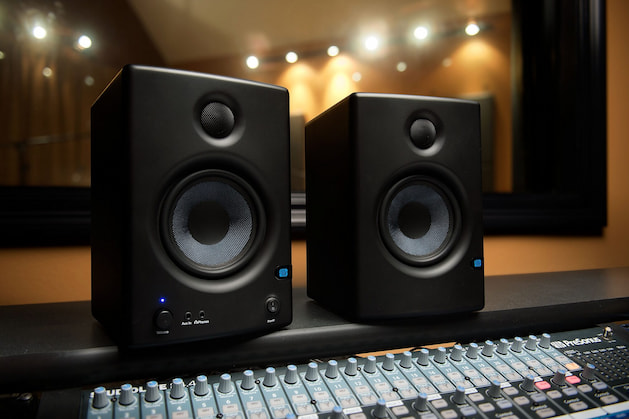
There are plenty of high-end speakers to choose from with all the latest and advanced features, however, as you’re still at the beginning of this journey, you don’t have to go all in on this purchase – not when you can buy DJ speaker of quality at the most convenient price. Yes, I’m talking about affordable Bluetooth monitor speakers.
The PreSonus Eris E4.5 BT is a solid example. Despite the volume limitations that make it a choice fit for smaller rooms and venues, better suited for more intimate parties and practice, and the somewhat weak bass response that makes it difficult to reproduce sub-bass frequencies, it’s an option that comes with a set of qualities all its own.
For one, it’s got great connectivity, giving you the chance to not only use it for DJing but also for casual music streaming from your smartphone. It comes at a more budget-friendly price, perfect for beginner DJs who are yet to practise skills and get to know about mixing and what they need in terms of equipment.
Additionally, it’s a choice that offers great sound too, so you can expect to get defined mids and clear highs, ideal if you want to keep track of different vocals and instruments. And, last but not least, it comes in a compact size which makes it great for small studios, home use and suitability for tight spaces. As such, it’s just as handy with remote mixing on the road thanks to the portable design.
How to Choose Your Ideal Speakers?
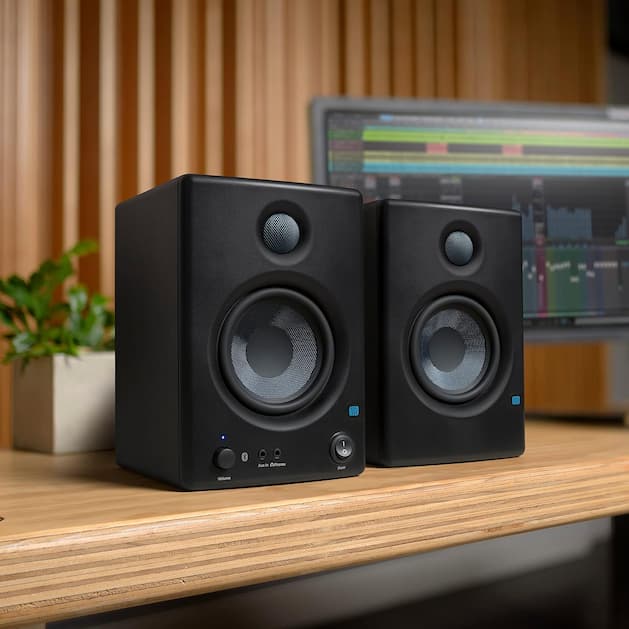
It all comes down to the purpose you choose to buy DJ speaker for, so start the purchasing considerations from this point. If you’re only planning on using the speakers at home for practice, in the studio or a small venue, you won’t have to look further than studio monitors. They’re made to provide you with a detailed audio.
If, however, you’re planning on also using them for parties, gigs or bigger venues, then you should invest in PA (Public Address) Systems. They’re much bigger, durable, plus louder and made for deep bass required to fill up the big spaces. Next up, the active or passive choice.
If you need a simpler, more mobile setup, the recommended choice is the active one which means it comes with a built-in amplifier. As the user-friendly design, perfect for beginner DJs, it only requires to plug the DJ controller in the speaker and power it up. This is different from the more complex passive option, which requires an external amplifier.
Speaker wattage is another aspect you need to check before you buy so you get the adequate speaker design and ensure it can handle the power. This is also related to the number of people attending the event; keep in mind the more the people, the more the power you’re going to need – about double the number. This is simple and easy to calculate as all you have to do is pay attention to the continuous wattage, the RMS (root mean square). For example, for 100 people, you’re going to need 200 RMS.
Getting the right size speakers is just as important. Compact, portable designs of 4 to 5 inches are more than enough for home, studio and small venue use. If you want more clarity and bass, though, you can choose the middle-ground, the 10 to 12-inch designs. One of these is enough to give you the clear and quality audio you require.
For large crowds at clubs, you need big speakers, so opt for the 15-inch option. Two of these are better than just the one for a more powerful sound. However, don’t forget placement; to ensure you get the adequate sound distribution, don’t place them next to each other, rather add them on opposite sides at the venue. Lastly, to make the most of the bass sound, invest in subwoofers too. It’s a helpful addition especially with grand events like weddings and outdoor parties.