
Shiny clips, tough ropes, a cool helmet. Think you are ready for your rock-climbing endeavour? Before you start eyeing up routes and dreaming about your first outdoor lead, there’s one piece of gear you need to get right from the start: your harness. That is the thing that is going to keep you connected to the rope, pressed against your body for hours, and quite literally saving your life if something goes wrong. So, yeah, it deserves more than just a quick scroll and add-to-cart action. Here is everything you should know.
Why Your Harness Choice Matters
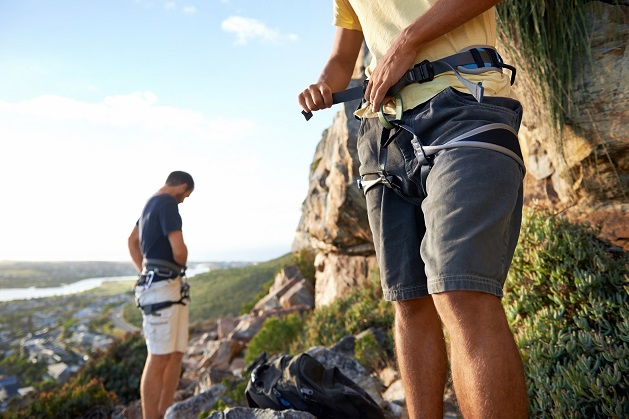
Your climbing gear is your lifeline. It’s what keeps you safe when you’re hanging in the air, resting mid-route, or maybe even eating a granola bar. The harness ensures you are safely caught if you lose grip or footing. It’s a crucial piece of your climbing system, and when paired with the right ropes and belay devices, it can save your life. A well-chosen, reliable climbing harness allows you to move freely, providing both comfort and safety. A poorly fitted harness or simply the wrong one for your style of climbing will make every session less enjoyable and less safe.
What Are the Different Types of Harnesses?
Harnesses come in different designs depending on their intended uses.
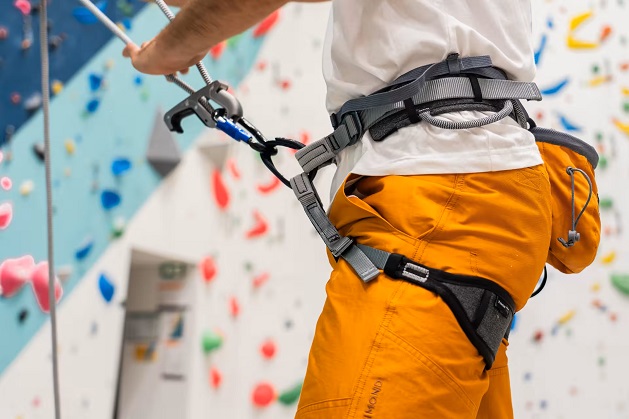
Sit harnesses are the most common type, used by most climbers. They feature a belt that goes around the waist and thighs, are very lightweight and quick to put on, and provide excellent support for sport climbing, trad climbing or gym sessions.
Full-body harnesses have a chest strap added to the basic sit design. These could be useful for younger climbers, whose centre of gravity is higher and might feel unsteady wearing a sit harness. They are also a great option for beginner climbers and for climbing via ferrata routes, where falling upside down is possible.
Big wall and aid climbing models are specifically engineered for spending many hours, in some cases even days, hanging in the vertical world. They have heavily padded waist belts and leg loops designed to provide comfort for extended periods. If you’re climbing at the gym, this one is definitely overkill, but if you’re climbing on a Grade V wall, you’ll be very grateful for wearing it.
Chest harnesses are almost always used together with a sit harness to form a full-body system. They are great for mountaineering, via ferrata, or crevasse rescue setups. You can also wear them for big walls, long multi-pitch trad routes, and drilling/bolting work.
What to Prioritize When Buying
- Fit is priority number one. A rock climbing harness that doesn’t suit your size or body shape will feel very uncomfortable, inefficient, and potentially dangerous. Waist belt sizes vary between manufacturers, so don’t guess and always test it out if possible.
- Adjustability. Check how the leg loops fasten. There are fixed leg loops, which are lighter and easier to use, and adjustable ones that let you fine-tune the fit, which is very useful when you climb in different layers depending on the season.
- Gear loops. If you do sport climbing or train in the gym, you only need two of them. If you plan to go into trad climbing territory, you should choose one with four gear loops (one at each hip and one at each side of your back).
- Weight. For long alpine days or when every gram counts, a lighter model can make all the difference. Ultralight options come at the expense of reduced padding. This works well if you’re moving fast and light, but for gym sessions or sport routes, some additional padding is worth the extra grams.
- Durability. Look at the material and construction. Your climbing gear plays an important part in your safety and needs to hold up to real use.
Getting the Correct Fit
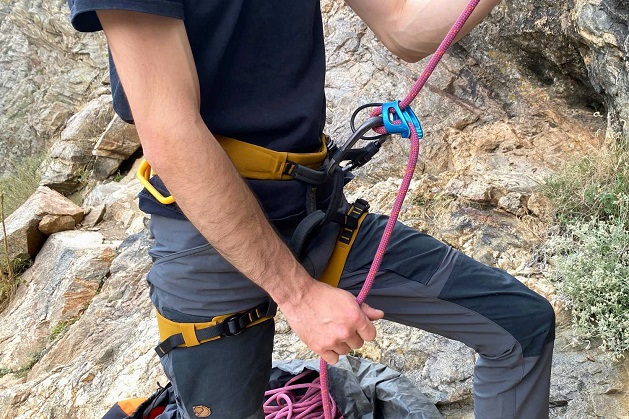
- The waist belt should sit above the hip bones, not on them, not around your waist. It should be tight but comfortable. You should be able to fit two fingers between the belt and your body, but not more. If you can fit your hand, it’s too loose; if it’s digging in, it’s too tight.
- The leg loops should rest high on your thighs, not close to your knees. They should be firm but not restrict any movement.
- Once everything is buckled, make a small movement test: step high, squat, and reach overhead. Your harness should move with you and not rise or shift around.
- Double-check that all buckles have been properly doubled back (or automatically locked in case of an auto-lock harness). It’s a basic but often overlooked step.
Even the best climbing harnesses have an expiry date. Most manufacturers recommend retiring a harness after 10 years from the date of manufacture, regardless of how much use it’s seen. UV exposure and general aging affect the materials even in storage. If your harness has survived a serious fall, shows visible wear, fraying, or damage, retire it sooner. No piece of gear is worth your life.
Takeaway
Deciding on the best climbing harness isn’t as difficult as it might seem. Choose one that matches your discipline, focus on fit and comfort, and try one on in person if possible. There’s a harness that is truly right for you; you just need to know what you’re looking for.