

Calculators might not be the most exciting item on an office desk, but they earn their place surprisingly quickly. From checking invoices to working out percentages, the right calculator can make everyday tasks quicker and easier. With desktop, handheld and scientific models available, there is more choice than simply picking the first calculator you see. The trick is finding one that fits the way you work.
The Right Calculator Can Make Office Life Easier

A calculator is one of those office essentials that you barely even notice until you need one. Then, suddenly, your phone is nowhere to be found, your spreadsheet has decided to be complicated, and you just need to work out 15% of a number. It’s much easier when you order calculators from a reliable supplier and have one at hand at all times.
These devices are very practical to have on your desktop, and reach for one when you need it most. Choosing a model depends on the work you do. Someone checking invoices and prices may need only basic arithmetic and percentage functions, while an accountant, business owner or technical professional may benefit from more specialised features.
An office calculator should be comfortable to use. Pick one that has big, clearly labelled keys and a display that’s easy to read. The layout is also important. Choose one that suits you the most. Remember, it’s not about finding the device with the most functions; it’s about choosing one that makes calculations easier.
Types of Calculators
Desktop Calculators
These devices are considered an office essential and the most common option you’ll see in all office spaces. They’re meant to stay on a desk, which is convenient when doing regular calculations throughout the day. A calculator with a larger body usually has larger keys and a more spacious layout. This is great when entering long strings of numbers.
A clear display also makes it easier to check the result with just a glance. Desktop calculators are particularly useful for everyday business tasks such as checking prices, adding expenses, calculating percentages, comparing figures and working through invoices. Some models even have dedicated business functions, making calculations even faster.
You should also consider the power options. Some desktop calculators use dual power, combining solar energy with battery power. This is great if you don’t want to rely solely on a battery. It’s great to have a dependable device sitting on your desk when you need it. No more going through drawers so you can make your calculations.
Printing Calculators
Some office calculations need more than a final answer. You may also need to see how you got there. If you’re looking for something like this, you should order calculators with a printing ability. They’re great for accounting, bookkeeping, cash handling and other tasks where keeping a physical record of calculations is helpful.
You won’t have to rely on memory or write down every step manually. On the printed tape you have all the information you need. This can be very useful when working through a long series of figures. If something doesn’t look right, you can review the printed calculation instead of starting over.
These calculators also make it easier to compare and check work with colleagues. When there’s a physical record, it’s easier to focus and review totals, expenses or financial figures. This may not be a device that all desktops need, but it certainly has a purpose that some workplaces can benefit from.
Scientific Calculators
Scientific calculators aren’t just for students. They’re often associated with classrooms and complicated maths, but they’re more than that. Some professional roles need functions that regular office calculators don’t have.
These models can handle more advanced mathematical operations, making them useful for technical, engineering, scientific and other specialised work. There are many different models, and the functions can include powers, roots, logarithms, trigonometry and statistical calculations.
Not everyone needs these types of calculators. So, it’s important to consider the task before you choose the technology. There is little point choosing a calculator capable of solving complex equations if your biggest daily challenge is calculating how many boxes of printer paper to order.
What to Consider when Buying
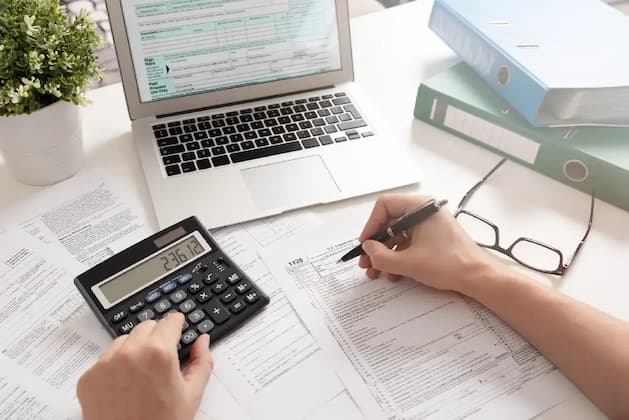
Once you know which type of calculator works best for your workspace, it’s time to consider the features. Display size is important. If it’s big and clear it’s easier to read, especially if you work with larger numbers. Always look for key layouts that are clearly labelled and comfortably spaced so even when doing repetitive calculations you don’t make mistakes.
Think about the size of the figures you commonly work with. A calculator with more digits can be useful for financial, business and other calculations involving larger numbers. When it comes to functions, always choose the ones you need the most. Anything extra can just get in the way and lead to mistakes. There are two power sources to choose from: solar and dual-powered. Both of them are good for desk use. It only comes down to your preferences.
In Summary
The right office calculator can be a small but useful addition to your everyday setup. Desktop models suit regular calculations, printing calculators help create a paper trail, and scientific models provide extra functions for specialised work. By considering your tasks, preferred features and working environment, you can choose a calculator that earns its space on your desk rather than simply taking it up.